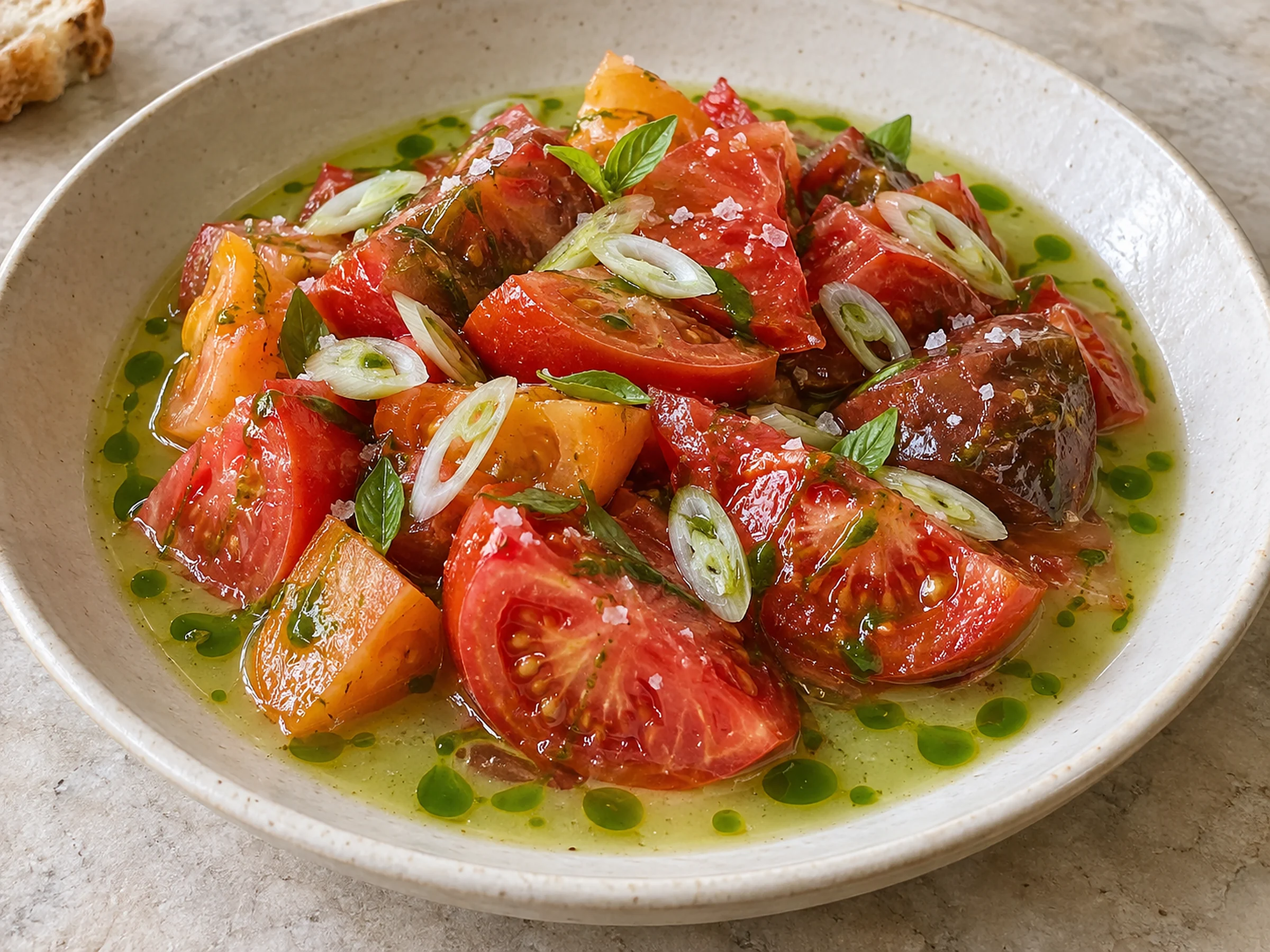
Dinner at Tragatá in Ronda, 17 August 2026, decoded afterwards from the restaurant’s own menu: Tomate de temporada aliñado, gazpacho de pimientos verdes, cebolleta tierna y albahaca — season tomato with green pepper gazpacho, spring onion and fresh basil. €15.50, from the “para compartir” section.
Mysteries solved: the sauce is a green pepper gazpacho, not green tomato (“pimientos verdes” vs “tomates verdes” is an easy mid-service mix-up, though some versions do add green tomato for acidity). The “something else” is cucumber and sherry vinegar in the gazpacho base. The whole fresh onions are cebolleta tierna — tender spring onion. And the herb is basil (albahaca) plus basil oil — small basil tips genuinely look like chervil on the plate.
Serves 4 to share. The gazpacho and basil oil can be made a day ahead.
Salting the tomatoes 20 minutes ahead is the quiet genius move — the “sauce” wasn’t pure gazpacho, it was gazpacho enriched by the tomatoes’ own seasoned juices. That’s why it tasted so intensely of tomato despite being green.
Restraint with the sauce. The temptation is to flood the bowl; Tragatá’s is a few millimetres deep. A scoop per forkful and no more.
Tomato quality is 90% of the dish. Room temperature, never fridge-cold, genuinely ripe.
Tomatoes: heirlooms or oxhearts from the Central Market or Willunga farmers market, Jan–Mar peak.
Green peppers: sold at Coles and Woolies as “sweet long green peppers”; green capsicum works but is grassier — add a touch more cucumber to soften it.
Leftover basil oil is superb on burrata, eggs or grilled fish.